Analysis: Europe’s winter gas squeeze could give Putin fresh leverage
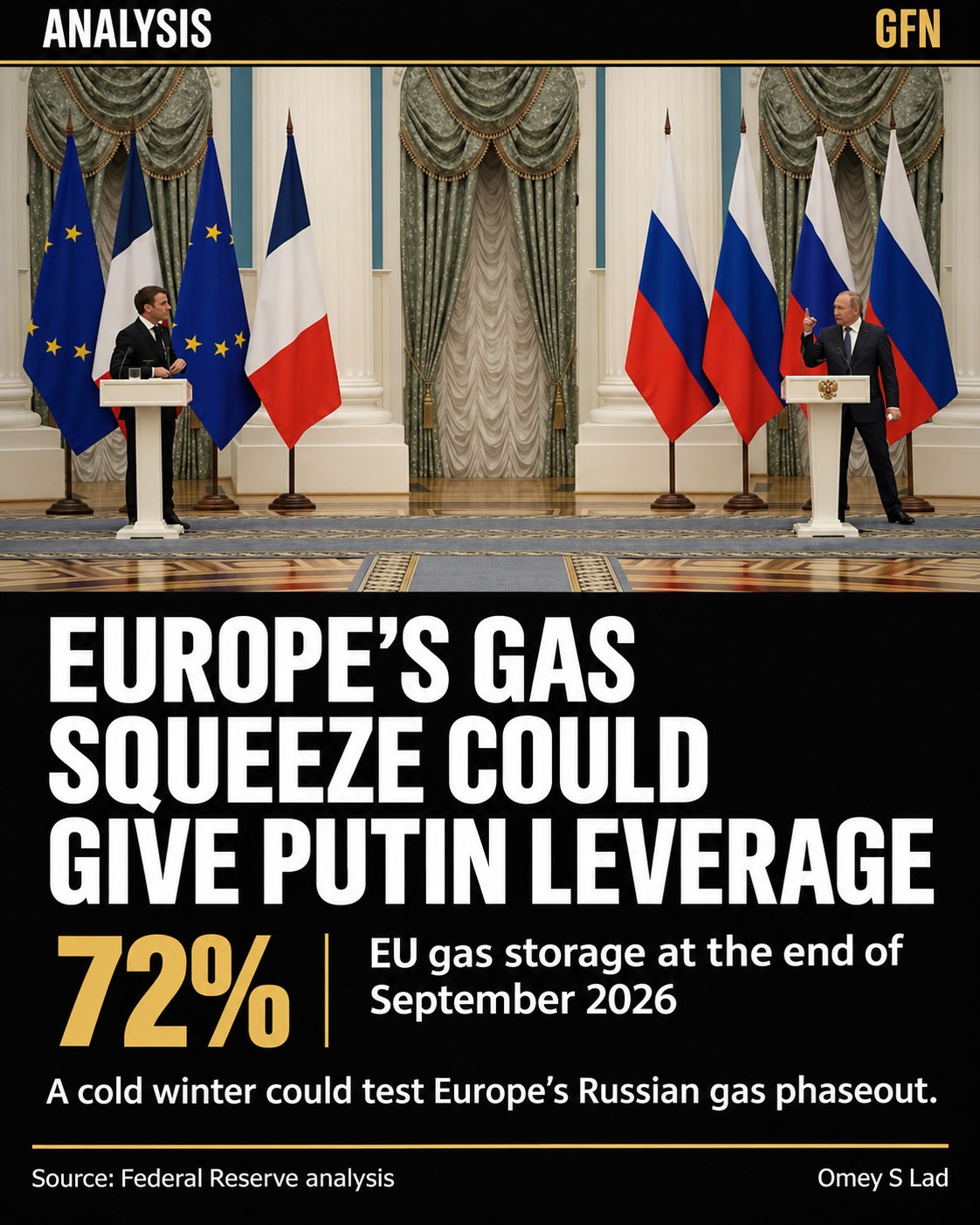
EU gas storage was about 72% full at the end of September, the lowest for that month since 2011. A cold winter could test Europe’s phaseout of Russian gas.
BRUSSELS — Europe is heading into winter with unusually low gas reserves and higher wholesale prices. That gives Vladimir Putin a potential opening. If a cold spell or an import disruption pushes prices higher, the European governments most exposed to rising energy costs could face pressure to keep buying Russian gas for longer. Federal Reserve ↗
Europe has less room for a supply shock
EU gas storage was about 72% full at the end of September, the lowest September reading since EU-wide records began in 2011. Germany’s storage was just 58% full. At the same time, disruptions to Qatari liquefied natural gas (LNG) shipments through the Strait of Hormuz tightened the global market.
By 20 November, a Federal Reserve analysis reported that European wholesale gas prices had more than doubled since February. Its baseline projected that the EU would finish March with storage around 30% full. A harsh winter could bring that down to 15%. Federal Reserve ↗
| Measure | Figure |
|---|---|
| EU gas storage, end of September 2026 | About 72% full, the lowest September level since 2011 Federal Reserve ↗ |
| Germany’s gas storage, end of September 2026 | 58% full Federal Reserve ↗ |
| EU storage by end of March 2027 (baseline) | About 30% full Federal Reserve ↗ |
| EU storage by end of March 2027 (harsh winter) | About 15% full Federal Reserve ↗ |
| Russia’s share of EU gas imports | 45% in 2021, 13% in 2025 Council of the EU ↗ |
Putin’s opening is political
A price spike affects EU countries differently. Gas network operators warn that bottlenecks can limit deliveries to parts of Central and Southeastern Europe when cold weather and supply disruptions coincide. If those countries struggle to replace remaining Russian supplies, Moscow could use the prospect of continued deliveries to encourage them to push for more flexibility on the EU’s phaseout. The potential gain for Putin would be a weaker common European position. ENTSOG ↗
Europe has already reduced Russia’s leverage
Russia’s share of EU gas imports fell from 45% in 2021 to 13% in 2025. Under the EU phaseout, the remaining long-term Russian LNG contracts face a ban from 1 January 2027, with long-term pipeline imports scheduled to end in autumn 2027. The rules allow a temporary exception of up to four weeks for short-term contracts under strict emergency conditions. Council of the EU ↗
The test comes if cold weather and disrupted imports hit at the same time. Europe’s ability to move gas to the countries that need it most will help determine whether higher prices turn into political leverage for Putin.